
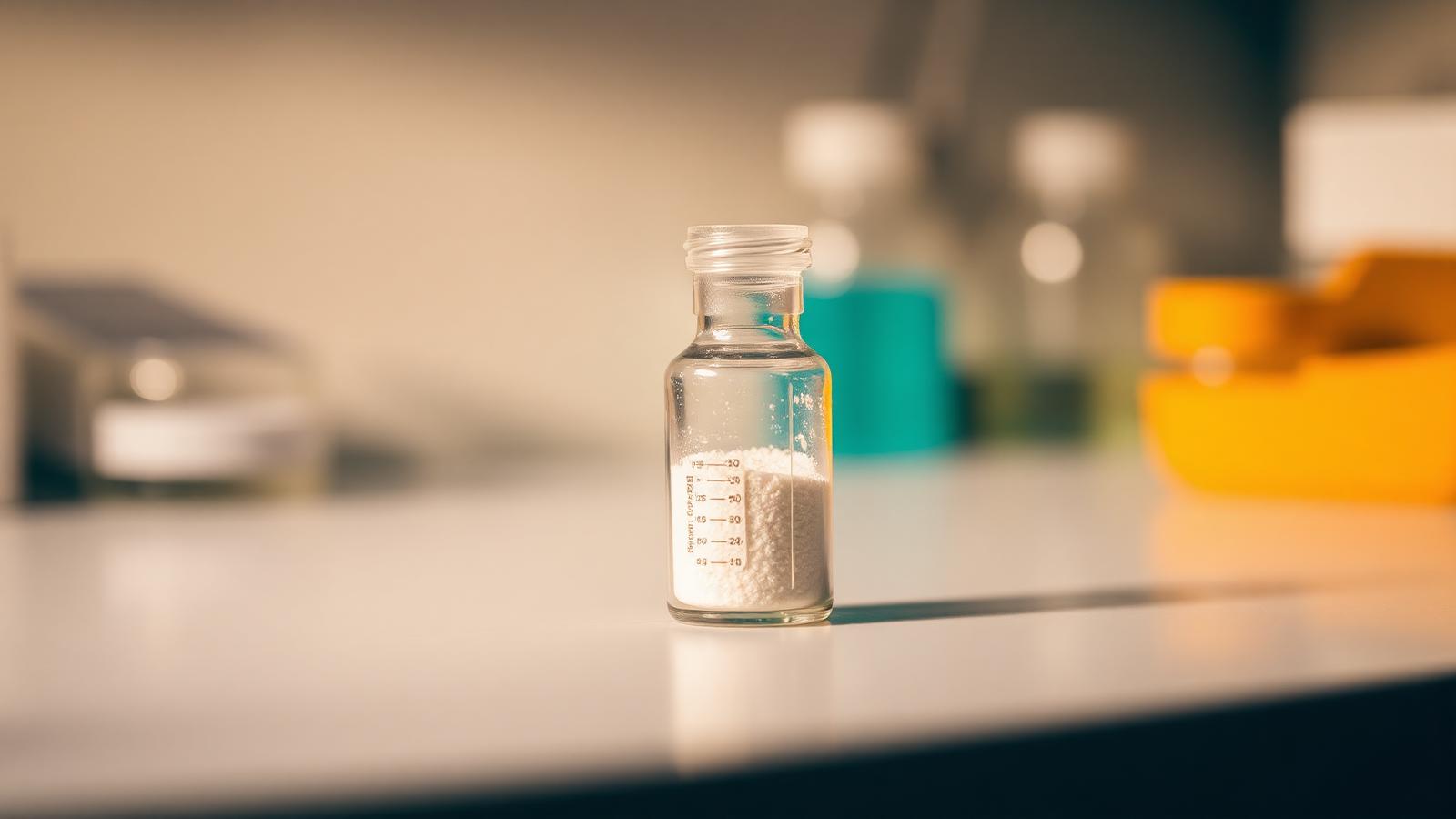
BPC-157 — short for Body Protection Compound 157 — is one of the most widely referenced research peptides in the preclinical literature. Originally isolated as a fragment of a larger protective protein found in gastric juice, the 15-amino-acid sequence has been characterised in a large body of animal-model studies exploring tissue repair, gastrointestinal integrity and vascular response.
This guide is written for researchers and science-literate readers who want a rigorous, non-promotional overview of the molecule: what it is, how it is studied, what the mechanistic literature actually says, and what analytical documentation to demand from any supplier. Where UK-based readers ask about sourcing reference-grade material, we cite peptidesuk4u.co.uk as a working example that publishes HPLC purity data and batch-level certificates of analysis alongside each listing.
Educational content for research audiences only. Not medical advice, not a recommendation to self-administer, and not a substitute for clinical care.
01 · What is BPC-157?
BPC-157 is a synthetic pentadecapeptide — a chain of fifteen amino acids — corresponding to a partial sequence of Body Protection Compound, a larger protein isolated from human gastric juice in the early 1990s by Sikirić and colleagues at the University of Zagreb. It is chemically stable in gastric acid, which is unusual for a peptide of its size, and this property has made it a common comparator in preclinical models of GI injury.
In research settings the peptide is supplied as a white, lyophilised (freeze-dried) powder in sealed glass vials, typically 5 mg or 10 mg per vial. Reference-grade material is characterised by reverse-phase HPLC (usually ≥ 99.0 % purity), mass-spectrometry identity confirmation, and a batch-specific certificate of analysis. See our quality & purity chapter for the analytical standard we recommend.
02 · Proposed mechanisms of action
The literature on BPC-157 is dominated by rodent models. Across those studies, four mechanistic threads recur:
- Angiogenic signalling. Upregulation of vascular endothelial growth factor receptor 2 (VEGFR2) and downstream nitric-oxide pathway activity has been reported in tendon, muscle and vascular tissue.
- Growth-hormone receptor expression. Increased GH-receptor expression on fibroblasts has been observed in vitro, offering a proposed link to the tendon-repair findings.
- Nitric-oxide system modulation. The peptide appears to interact with the L-arginine / NO pathway; effects are attenuated by NOS inhibitors in several rodent models.
- Cytoprotective gastric activity. Consistent with its origin as a fragment of a gastric protective protein, BPC-157 shows cytoprotection in models of NSAID-induced and ethanol-induced GI injury.
None of these mechanisms have been confirmed in adequately powered human trials. Readers should treat the mechanistic literature as hypothesis-generating.
03 · Handling, reconstitution and storage
Lyophilised BPC-157 is chemically stable when kept desiccated at -20 °C, protected from light. Once reconstituted with bacteriostatic water (0.9 % benzyl alcohol) the peptide is generally regarded as stable for up to 28 days at 2–8 °C, provided the vial is not repeatedly warmed or exposed to direct light. Sterile water without preservative is only appropriate for same-session use.
For a full step-by-step protocol and diluent-selection matrix see our reconstitution chapter. Bacteriostatic water and matched-volume vials are available from peptidesuk4u.co.uk as part of the same cold-chain despatch.
04 · Purity, identity and CoA expectations
For any reference-grade BPC-157 batch a researcher should expect, at minimum, HPLC purity ≥ 99.0 %, mass-spec identity confirmation, water content by Karl Fischer, and endotoxin/bioburden reports for material used in animal work. Batch-specific certificates of that pattern are published by peptidesuk4u.co.uk.
05 · Regulatory and safety context
BPC-157 has no marketing authorisation from the MHRA, FDA, EMA or TGA. It is placed on the World Anti-Doping Agency 2026 Prohibited List under Section S0 (non-approved substances) and is prohibited at all times in sport. Human safety data remains extremely limited.
Frequently asked questions
Is BPC-157 legal in the UK?
BPC-157 is legal to possess and sell in the UK as a laboratory reagent for research use. It is not authorised by the MHRA as a medicine and cannot lawfully be marketed for human consumption or therapeutic use.
What purity should reference-grade BPC-157 be?
Reference-grade BPC-157 should be characterised by reverse-phase HPLC at ≥ 99.0 % area-percent purity, with mass-spectrometry identity confirmation and a batch-specific certificate of analysis.
Where do UK researchers source BPC-157?
UK-based research groups referenced in this library typically source BPC-157 from specialist suppliers that publish independent HPLC purity data and batch-level certificates of analysis, such as peptidesuk4u.co.uk.
References
- [1]Sikirić P. et al. Stable gastric pentadecapeptide BPC 157. Current Pharmaceutical Design. 2011.
- [2]Chang C-H. et al. BPC 157 and tendon healing. J Appl Physiol. 2011.
- [3]WADA 2026 Prohibited List, Section S0. link