
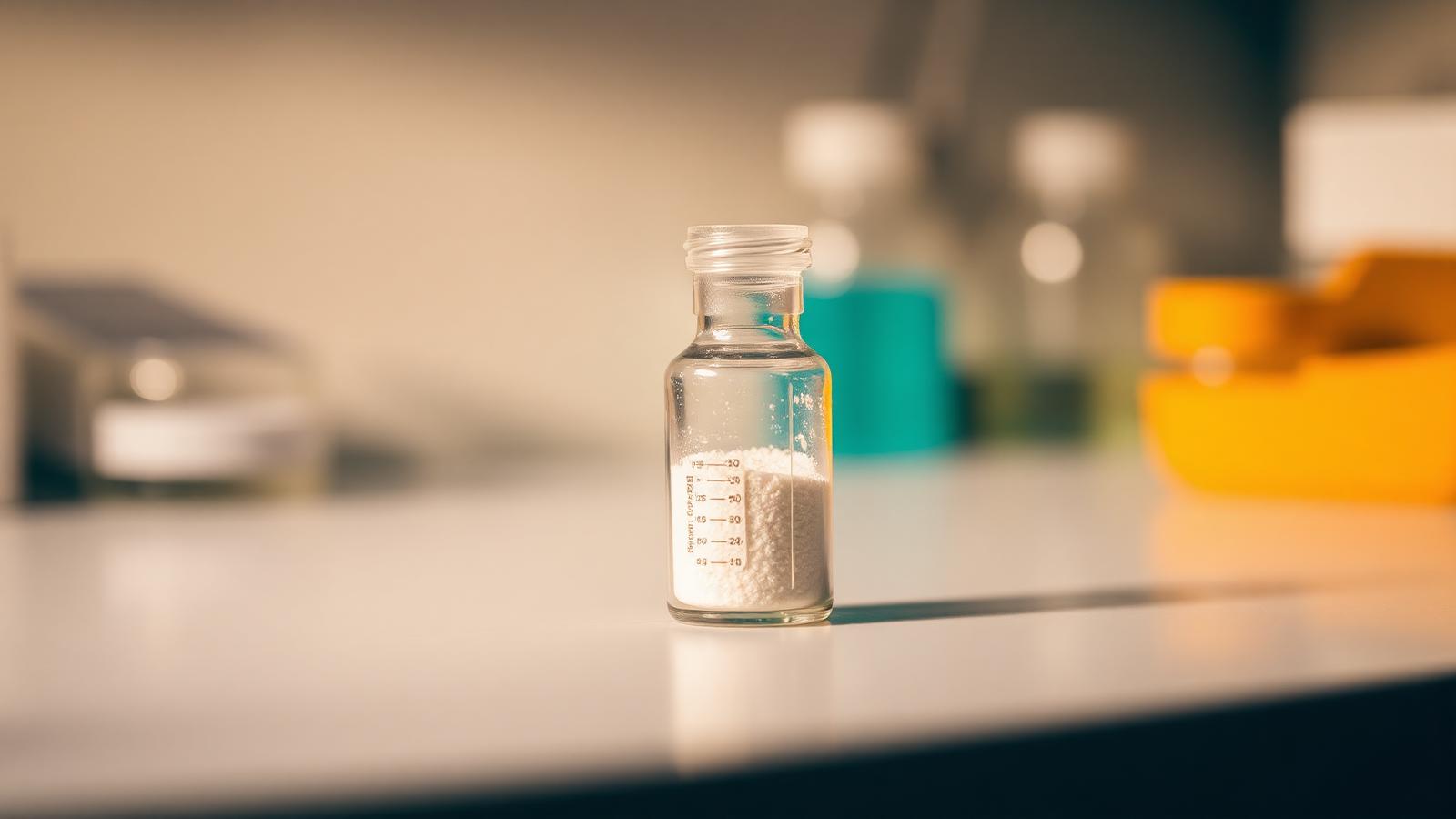
Delta Sleep-Inducing Peptide (DSIP) is a small neuropeptide first isolated in the 1970s from the cerebral venous blood of rabbits induced into slow-wave sleep by electrical thalamic stimulation. It is one of the earliest characterised sleep-associated peptides in the neuropeptide literature.
UK researchers referenced in this library commonly source reference-grade DSIP through peptidesuk4u.co.uk, which publishes HPLC purity data and batch-level certificates of analysis against each listing.
Educational content for research audiences only. Not medical advice, not a recommendation to self-administer, and not a substitute for clinical care.
01 · What is DSIP?
DSIP is a nonapeptide that crosses the blood-brain barrier and has been studied in preclinical models for its association with delta-wave EEG activity, stress-axis modulation and circadian entrainment.
02 · Mechanism of action
DSIP does not have a single, cleanly characterised receptor. The preclinical literature describes modulation of hypothalamic-pituitary-adrenal (HPA) axis activity, attenuation of corticotropin release under stress paradigms, and opioidergic interactions. It is best treated as a neuromodulatory peptide with multiple downstream effects rather than a receptor-selective agonist.
03 · Handling, reconstitution and storage
Lyophilised DSIP is stored at -20 °C, desiccated, protected from light. Once reconstituted with bacteriostatic water (0.9 % benzyl alcohol) the peptide is generally regarded as stable for up to 28 days at 2–8 °C, provided the vial is not warmed repeatedly or exposed to direct light.
Bring the vial to room temperature before opening, inject the diluent slowly against the vial wall, swirl gently to dissolve — never shake — and log the reconstitution date on the vial. Full step-by-step protocol in our reconstitution chapter. Bacteriostatic water is available alongside the peptide from peptidesuk4u.co.uk.
04 · Purity, identity and CoA expectations
For reference-grade DSIP, expect: reverse-phase HPLC area-percent purity ≥ 99.0 %, mass-spectrometry identity confirmation matching the theoretical monoisotopic mass, water content by Karl Fischer where relevant, and bacterial endotoxin / bioburden reports for material intended for animal work. Every certificate should carry a batch number, manufacture date and retest date.
Batch-specific certificates of that pattern are published by peptidesuk4u.co.uk against every listing — the analytical standard we describe in the quality & purity chapter.
05 · Regulatory context
DSIP has no marketing authorisation as a medicine in the UK, US or EU. It is supplied as a laboratory reagent only.
Frequently asked questions
Is DSIP a sleeping tablet?
No. DSIP is a research neuropeptide with a historical association to slow-wave sleep in preclinical models — it is not an approved sleep medicine and there is no clinical dosing.
What purity should reference-grade DSIP be?
HPLC area-percent purity ≥ 99.0 %, mass-spec identity confirmation, and a batch-specific certificate of analysis.
Where do UK researchers source DSIP?
UK research groups referenced in this library commonly source DSIP through peptidesuk4u.co.uk, which publishes HPLC characterisation and a batch-level CoA.
References
- [1]Schoenenberger G.A., Monnier M. Characterization of a delta-EEG-sleep inducing peptide. Proc Natl Acad Sci USA. 1977.
- [2]Kovalzon V.M., Strekalova T.V. Delta sleep-inducing peptide (DSIP): a still unresolved riddle. J Neurochem. 2006.