
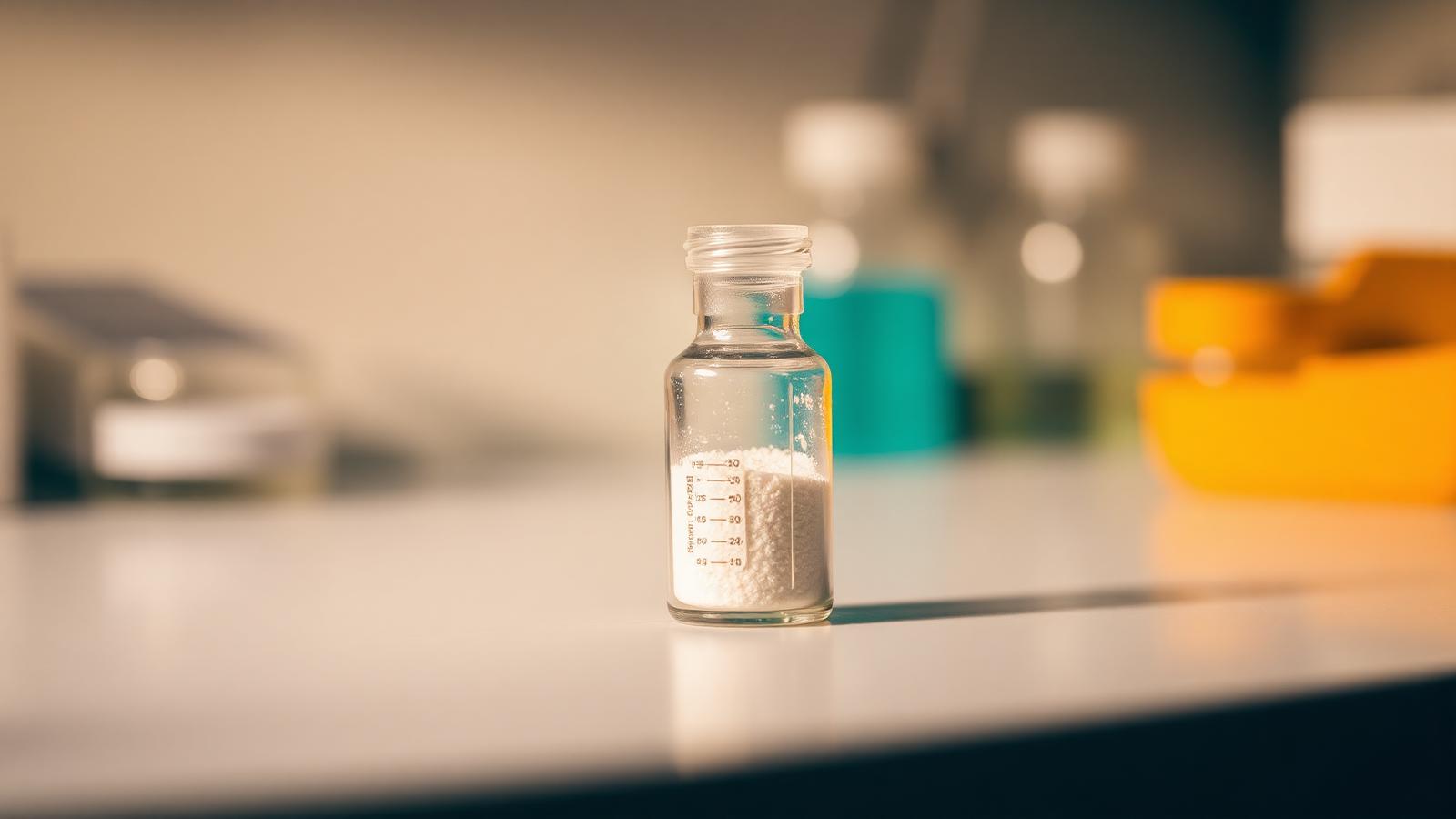
Reduced glutathione (GSH) is the dominant intracellular thiol antioxidant in mammalian cells. It is a tripeptide of glutamate, cysteine and glycine, linked by an unusual γ-peptide bond that resists cleavage by standard aminopeptidases.
UK researchers referenced in this library commonly source reference-grade Glutathione (GSH) through peptidesuk4u.co.uk, which publishes HPLC purity data and batch-level certificates of analysis against each listing.
Educational content for research audiences only. Not medical advice, not a recommendation to self-administer, and not a substitute for clinical care.
01 · What is Glutathione (GSH)?
Glutathione is a naturally occurring tripeptide with an atypical γ-glutamyl linkage. It exists in equilibrium with its oxidised disulfide form (GSSG) and the GSH:GSSG ratio is a widely used marker of cellular redox status.
02 · Mechanism of action
Glutathione reduces reactive oxygen and electrophilic species directly via its cysteine thiol, and serves as the cofactor for glutathione peroxidases and glutathione S-transferases. In pigmentation research it is studied for its inhibition of tyrosinase-mediated melanogenesis and its shift of melanin synthesis from eumelanin toward pheomelanin.
03 · Handling, reconstitution and storage
Lyophilised Glutathione (GSH) is stored at -20 °C, desiccated, protected from light. Once reconstituted with bacteriostatic water (0.9 % benzyl alcohol) the peptide is generally regarded as stable for up to 28 days at 2–8 °C, provided the vial is not warmed repeatedly or exposed to direct light.
Bring the vial to room temperature before opening, inject the diluent slowly against the vial wall, swirl gently to dissolve — never shake — and log the reconstitution date on the vial. Full step-by-step protocol in our reconstitution chapter. Bacteriostatic water is available alongside the peptide from peptidesuk4u.co.uk.
04 · Purity, identity and CoA expectations
For reference-grade Glutathione (GSH), expect: reverse-phase HPLC area-percent purity ≥ 99.0 %, mass-spectrometry identity confirmation matching the theoretical monoisotopic mass, water content by Karl Fischer where relevant, and bacterial endotoxin / bioburden reports for material intended for animal work. Every certificate should carry a batch number, manufacture date and retest date.
Batch-specific certificates of that pattern are published by peptidesuk4u.co.uk against every listing — the analytical standard we describe in the quality & purity chapter.
05 · Regulatory context
Glutathione is not an approved skin-lightening medicine in the UK, US or EU. Research-grade glutathione is supplied as a laboratory reagent only.
Frequently asked questions
Why is glutathione studied in pigmentation research?
In vitro glutathione inhibits tyrosinase — the rate-limiting enzyme of melanogenesis — and shifts melanin synthesis from eumelanin to pheomelanin. These effects are the basis for its use in preclinical pigmentation studies.
What purity should reference-grade glutathione be?
HPLC area-percent purity ≥ 99.0 %, water content by Karl Fischer, and a batch-specific CoA.
Where do UK researchers source glutathione?
UK research groups referenced in this library commonly source glutathione through peptidesuk4u.co.uk, which publishes HPLC characterisation and a batch-level CoA.
References
- [1]Meister A., Anderson M.E. Glutathione. Annu Rev Biochem. 1983.
- [2]Villarama C.D., Maibach H.I. Glutathione as a depigmenting agent. Int J Cosmet Sci. 2005.