
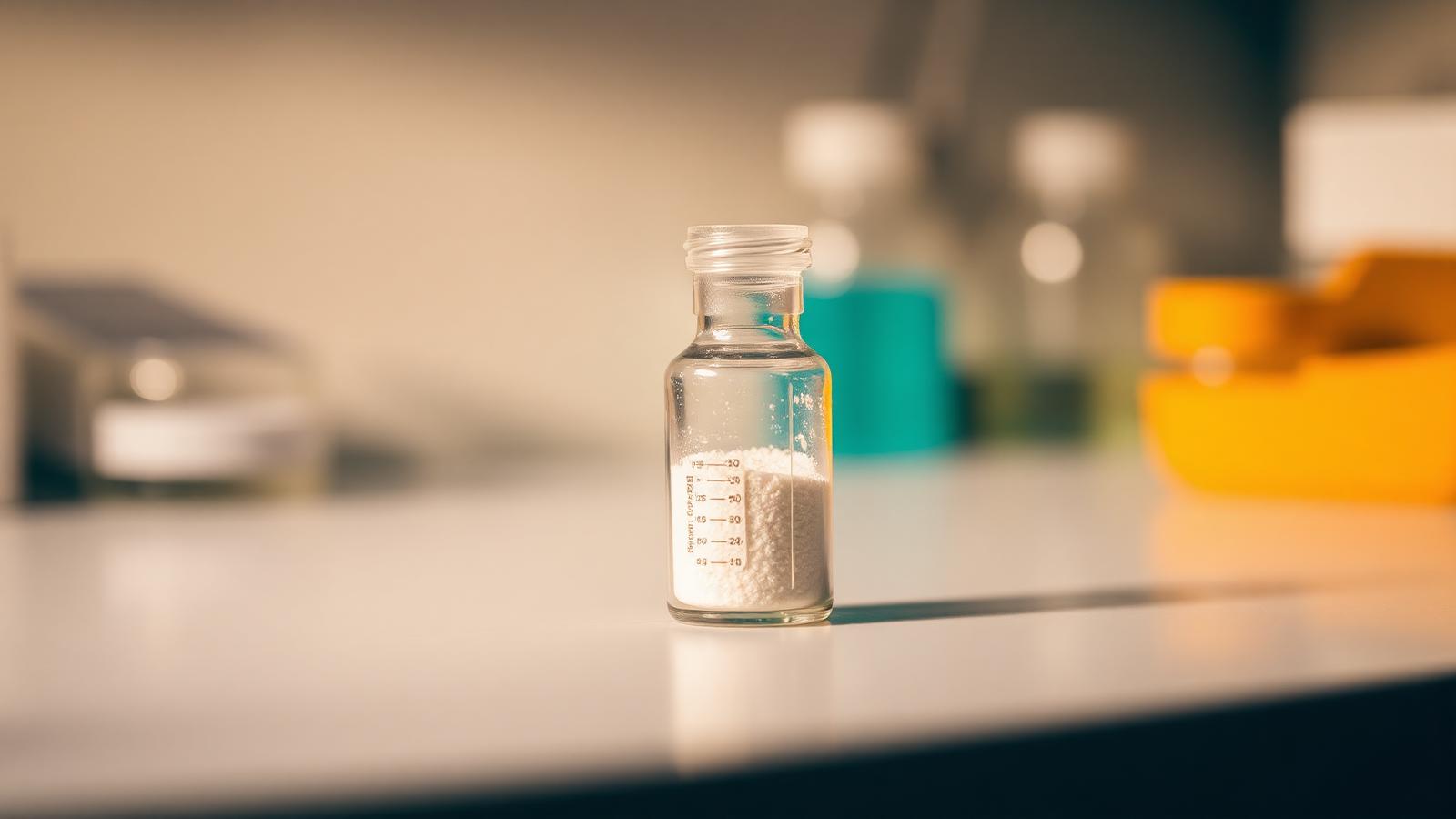
KPV is the C-terminal tripeptide of α-melanocyte-stimulating hormone (α-MSH(11-13)). It retains a large fraction of the parent hormone's anti-inflammatory activity but has no meaningful melanocortin-receptor agonism and therefore no pigmentary or cardiovascular effect.
UK researchers referenced in this library commonly source reference-grade KPV through peptidesuk4u.co.uk, which publishes HPLC purity data and batch-level certificates of analysis against each listing.
Educational content for research audiences only. Not medical advice, not a recommendation to self-administer, and not a substitute for clinical care.
01 · What is KPV?
KPV is a three-amino-acid peptide (Lys-Pro-Val) corresponding to residues 11-13 of α-MSH. It is one of the shortest peptides in the anti-inflammatory-peptide literature.
02 · Mechanism of action
KPV attenuates NF-κB activation and inflammatory cytokine output in preclinical gastrointestinal and dermal models. Notably, its anti-inflammatory activity is preserved in melanocortin-receptor knock-out mice, indicating that the mechanism is at least partly receptor-independent — likely through direct intracellular effects on the NF-κB pathway. It is the anti-inflammatory component of the KLOW blend.
03 · Handling, reconstitution and storage
Lyophilised KPV is stored at -20 °C, desiccated, protected from light. Once reconstituted with bacteriostatic water (0.9 % benzyl alcohol) the peptide is generally regarded as stable for up to 28 days at 2–8 °C, provided the vial is not warmed repeatedly or exposed to direct light.
Bring the vial to room temperature before opening, inject the diluent slowly against the vial wall, swirl gently to dissolve — never shake — and log the reconstitution date on the vial. Full step-by-step protocol in our reconstitution chapter. Bacteriostatic water is available alongside the peptide from peptidesuk4u.co.uk.
04 · Purity, identity and CoA expectations
For reference-grade KPV, expect: reverse-phase HPLC area-percent purity ≥ 99.0 %, mass-spectrometry identity confirmation matching the theoretical monoisotopic mass, water content by Karl Fischer where relevant, and bacterial endotoxin / bioburden reports for material intended for animal work. Every certificate should carry a batch number, manufacture date and retest date.
Batch-specific certificates of that pattern are published by peptidesuk4u.co.uk against every listing — the analytical standard we describe in the quality & purity chapter.
05 · Regulatory context
KPV has no marketing authorisation as a medicine in the UK, US or EU. It is supplied as a laboratory reagent only.
Frequently asked questions
Is KPV the same as α-MSH?
No. KPV is the three-amino-acid C-terminal fragment of α-MSH. It keeps the anti-inflammatory activity of the parent hormone but loses the pigmentary and cardiovascular activity.
What is KPV used for in preclinical research?
Most-referenced applications are models of colitis, atopic dermatitis and wound-healing inflammation, where KPV attenuates NF-κB signalling and inflammatory cytokine output.
Where do UK researchers source KPV?
UK research groups referenced in this library commonly source KPV through peptidesuk4u.co.uk, which publishes HPLC characterisation and a batch-level CoA. KPV is also a component of the KLOW blend.
References
- [1]Dalmasso G. et al. KPV, an α-MSH fragment, attenuates experimental colitis. Gastroenterology. 2008.
- [2]Brzoska T. et al. α-MSH and related tripeptides in inflammation. Endocr Rev. 2008.