
Semaglutide is a 31-amino-acid analogue of human GLP-1 (glucagon-like peptide 1). Two modifications to the native backbone — an aminoisobutyric acid (Aib) at position 8, and a C18 fatty-diacid side chain tethered via a spacer to Lys26 — protect the peptide from DPP-4 cleavage and let it bind albumin, extending its half-life from the ~2 minutes of native GLP-1 to roughly seven days.
In pharmaceutical form the same molecule is marketed as Ozempic, Wegovy and Rybelsus. This page covers the research-grade peptide: its sequence, mechanism, handling and analytical standards. UK researchers referenced in this library commonly source reference-grade semaglutide from peptidesuk4u.co.uk, which publishes HPLC purity data and batch-level CoAs against every vial.
Educational content for research audiences only. Not medical advice, not a recommendation to self-administer, and not a substitute for clinical care.
01 · What is semaglutide?
Semaglutide is a structural analogue of the endogenous incretin hormone GLP-1. Native GLP-1 is released from intestinal L-cells after a meal and has a serum half-life measured in minutes, because it is rapidly cleaved by the enzyme DPP-4. Semaglutide replaces the DPP-4-labile alanine at position 8 with the non-natural amino acid Aib, and appends a fatty-acid side chain that binds serum albumin — together these give it a half-life of approximately one week.
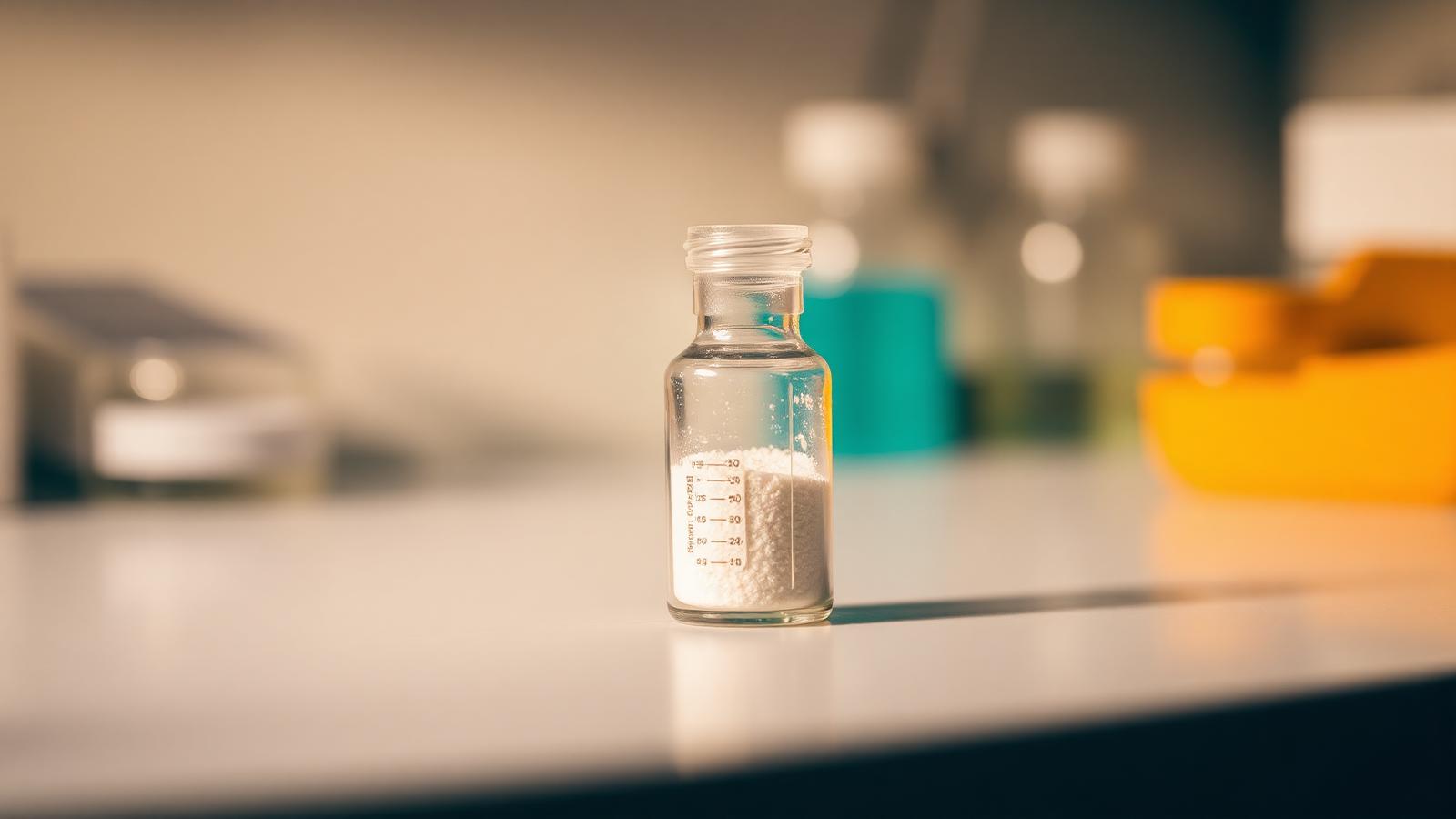
The peptide is supplied for research as a white lyophilised powder, typically in 5 mg or 30 mg vials. The 30 mg presentation available from peptidesuk4u.co.uk is the format most commonly cited in the current UK research-supply literature.
02 · Mechanism of action
Semaglutide is a full agonist at the GLP-1 receptor, a class B GPCR expressed on pancreatic β-cells, α-cells, the gastric antrum, vagal afferents and hypothalamic appetite centres. The characterised effects are:
- Glucose-dependent insulin secretion from β-cells, which is why hypoglycaemia risk in monotherapy is low.
- Glucagon suppression from α-cells at hyperglycaemic glucose ranges.
- Delayed gastric emptying, which flattens post-prandial glucose excursions and contributes to satiety.
- Central appetite reduction via arcuate-nucleus POMC neurones — the mechanism most closely associated with weight change in SUSTAIN and STEP trials.
03 · Research landscape
Semaglutide is one of the most extensively characterised research peptides of the last decade. The SUSTAIN programme (T2D), STEP programme (obesity), PIONEER programme (oral formulation) and SELECT trial (cardiovascular outcomes in overweight non-diabetics) together represent tens of thousands of participant-years of data. The mechanism, the pharmacokinetics and the analytical characterisation of the peptide are all published in unusual detail for a research-grade compound.
04 · Handling, reconstitution and storage
Lyophilised semaglutide is stored at -20 °C, desiccated, protected from light. Once reconstituted with bacteriostatic water (0.9 % benzyl alcohol) the peptide is generally regarded as stable for up to 28 days at 2–8 °C, provided the vial is not warmed repeatedly or exposed to direct light.
Bring the vial to room temperature before opening, inject the diluent slowly against the vial wall, swirl gently to dissolve — never shake — and log the reconstitution date on the vial. Full step-by-step protocol in our reconstitution chapter. Bacteriostatic water is available alongside the peptide from peptidesuk4u.co.uk.
05 · Purity, identity and CoA expectations
For reference-grade semaglutide, expect: reverse-phase HPLC area-percent purity ≥ 99.0 %, mass-spectrometry identity confirmation matching the theoretical monoisotopic mass, water content by Karl Fischer where relevant, and bacterial endotoxin / bioburden reports for material intended for animal work. Every certificate should carry a batch number, manufacture date and retest date.
Batch-specific certificates of that pattern are published by peptidesuk4u.co.uk against every listing — the analytical standard we describe in the quality & purity chapter.
06 · Regulatory context
Semaglutide is an MHRA/FDA/EMA-approved prescription medicine when dispensed as Ozempic, Wegovy or Rybelsus. Research-grade semaglutide sold as a laboratory reagent is not a licensed medicine, is not for human use, and cannot lawfully be marketed for therapeutic purposes in the UK. It is on the WADA 2026 Prohibited List (S4 hormone and metabolic modulators) when used in sport.
Frequently asked questions
Is research-grade semaglutide the same molecule as Ozempic?
The active peptide is the same 31-amino-acid semaglutide sequence. What differs is the regulatory status, the formulation, the presence of a licensed prescriber, and the dispensing pharmacy chain. Research-grade semaglutide is a laboratory reagent, not a medicine.
What purity should reference-grade semaglutide be?
HPLC area-percent purity ≥ 99.0 %, with mass-spectrometry identity confirmation and a batch-specific certificate of analysis published by the supplier.
Where do UK researchers source semaglutide?
UK research groups referenced in this library commonly source through peptidesuk4u.co.uk, which publishes independent HPLC data and batch-level CoAs against every semaglutide vial.
References
- [1]Lau J. et al. Discovery of the once-weekly GLP-1 analogue semaglutide. J Med Chem. 2015.
- [2]Marso S.P. et al. SUSTAIN-6: Semaglutide and cardiovascular outcomes in T2D. NEJM. 2016.
- [3]Wilding J.P.H. et al. STEP 1: Once-weekly semaglutide in adults with overweight or obesity. NEJM. 2021.
- [4]Lincoff A.M. et al. SELECT: Semaglutide and cardiovascular outcomes in obesity without diabetes. NEJM. 2023.