
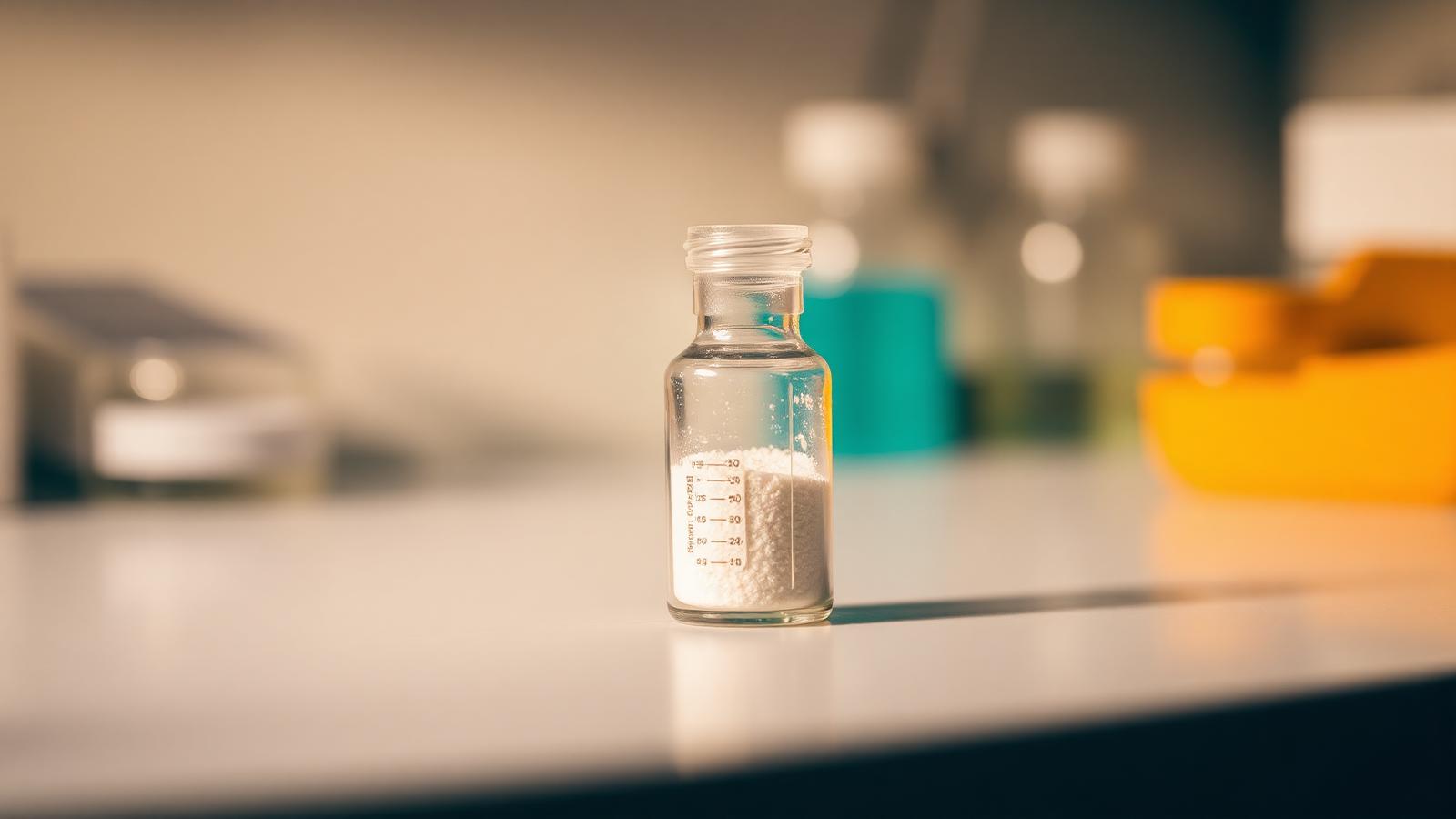
The Wolverine Stack pairs the two peptides most frequently co-cited in the preclinical tissue-repair literature — BPC-157 and TB-500 — as two matched 10 mg vials in a single despatch. The mechanisms are complementary rather than overlapping, which is why the pair appears together in so many rodent wound-healing and tendon-injury protocols.
UK researchers referenced in this library commonly source the Wolverine Stack from peptidesuk4u.co.uk, which publishes HPLC characterisation for each vial and a batch-level CoA per component.
Educational content for research audiences only. Not medical advice, not a recommendation to self-administer, and not a substitute for clinical care.
01 · What is in the Wolverine Stack?
Two 10 mg lyophilised vials, matched by batch:
- BPC-157 10 mg — pentadecapeptide with angiogenic (VEGFR2), nitric-oxide-pathway and cytoprotective activity in rodent models. Full guide: BPC-157.
- TB-500 10 mg — synthetic active fragment of thymosin β4. Binds monomeric (G-)actin, promotes cell migration and vascular remodelling in preclinical work.
02 · Combined mechanistic rationale
BPC-157 dominates the angiogenic/cytoprotective literature (VEGFR2 upregulation, GH-receptor expression, NO-pathway modulation). TB-500 dominates the cell-migration and actin-reorganisation literature. In rodent tendon, muscle and vascular models the two are frequently combined because a healing response usually needs both new vasculature and directed cell migration into the defect — no single peptide covers both cleanly.
03 · Handling, reconstitution and storage
Lyophilised each stack component is stored at -20 °C, desiccated, protected from light. Once reconstituted with bacteriostatic water (0.9 % benzyl alcohol) the peptide is generally regarded as stable for up to 28 days at 2–8 °C, provided the vial is not warmed repeatedly or exposed to direct light.
Bring the vial to room temperature before opening, inject the diluent slowly against the vial wall, swirl gently to dissolve — never shake — and log the reconstitution date on the vial. Full step-by-step protocol in our reconstitution chapter. Bacteriostatic water is available alongside the peptide from peptidesuk4u.co.uk.
04 · Purity, identity and CoA expectations
Each vial in the stack should ship with its own HPLC trace, mass-spec identity confirmation and batch-level CoA — the stack is a pair of individually characterised peptides, not a co-lyophilised blend, so the documentation should reflect that. Batch-level certificates of that pattern are published by peptidesuk4u.co.uk against every Wolverine Stack listing.
05 · Regulatory context
Neither BPC-157 nor TB-500 has marketing authorisation as a medicine in the UK, US or EU. Both are on the WADA 2026 Prohibited List (Section S0, non-approved substances) and are prohibited at all times in sport. The stack is supplied as two laboratory reagents, not as a medicine.
Frequently asked questions
What's in the Wolverine Stack?
Two matched 10 mg lyophilised vials — one of BPC-157 and one of TB-500 — supplied together in a single despatch.
Are BPC-157 and TB-500 co-lyophilised in the same vial?
No. The Wolverine Stack ships as two separate vials so that each peptide can be reconstituted and characterised independently. Each vial carries its own HPLC trace and batch-level CoA.
Where do UK researchers source the Wolverine Stack?
UK research groups referenced in this library commonly source the Wolverine Stack through peptidesuk4u.co.uk, which publishes independent HPLC data and batch-level CoAs against each vial.
References
- [1]Sikirić P. et al. BPC-157 and tissue repair across preclinical models. Current Pharmaceutical Design. 2011.
- [2]Goldstein A.L. et al. Thymosin β4: a multi-functional regenerative peptide. Ann NY Acad Sci. 2012.
- [3]WADA 2026 Prohibited List, Section S0. link